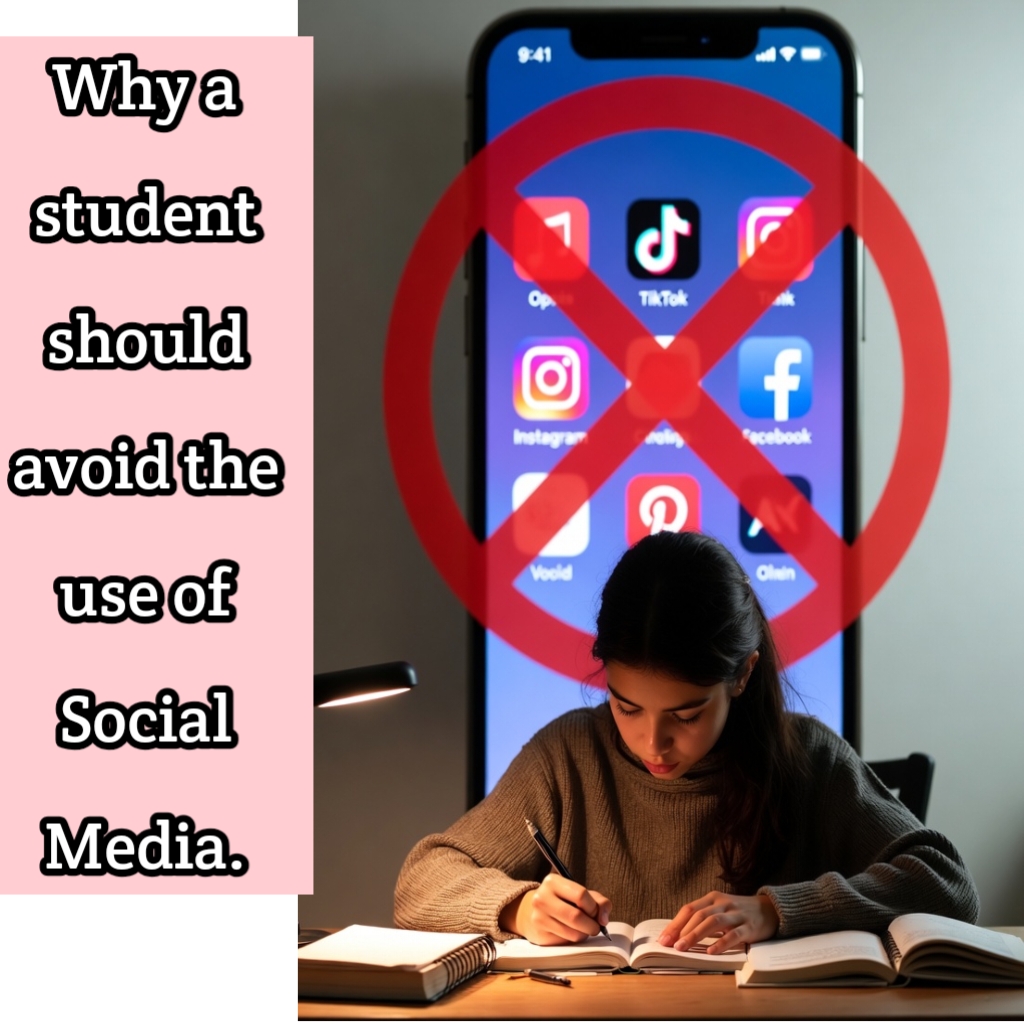
Why a student should avoid social media

The Hidden Cost of Scrolling: Why Students Should Consider a Social Media Break
Published in Education & Mental Health
The Digital Paradox
In a world where “staying connected” is the ultimate mantra, suggesting that students should avoid social media can sound almost heretical. We’ve traded playground chatter for group chats and library sessions for endless scrolling.
However, beneath the vibrant filters and viral trends lies a complex ecosystem that can quietly undermine a student’s academic success and mental well-being. Here is why hitting the “log out” button might be the smartest move a student can make this semester.
1. The Death of “Deep Work”
The most immediate casualty of social media is the attention span. Academic excellence requires what psychologists call “Deep Work”—the ability to focus without distraction on a cognitively demanding task.
- The Notification Trap: Every ping triggers a hit of dopamine, pulling the brain away from complex problem-solving.
- The Cost of Task-Switching: Research suggests it can take significant time to regain full focus after checking a single notification. For a student, a two-hour study session can easily dwindle into 40 minutes of actual learning.
2. The Comparison Trap and Mental Health
Social media isn’t a reflection of reality; it’s a highlight reel. For students—who are often in a vulnerable stage of identity formation—this creates a distorted view of the world.
- Social Comparison: Seeing peers post curated vacations or “academic wins” can lead to feelings of inadequacy.
- The Validation Loop: When self-worth becomes tied to “likes,” a low-engagement post can lead to genuine spikes in anxiety and symptoms of depression.
Key Stat: Studies have consistently linked heavy social media use in adolescents to a higher risk of sleep disturbances and symptoms of anxiety.
3. The Erosion of Sleep Quality
Sleep is the foundation of memory consolidation. Unfortunately, the blue light emitted by screens suppresses melatonin, the hormone responsible for sleep.
Beyond the biology, there is the “infinite scroll.” Many students use social media to “wind down,” but the cognitive stimulation keeps the brain in a high-alert state. This leads to “brain fog” during morning lectures and decreased information retention.
4. Protecting Your “Digital Footprint”
In the heat of the moment, it’s easy to forget that the internet is written in ink, not pencil.
- Admissions & Employment: University admissions officers and future employers increasingly screen social media profiles.
- Permanent Records: An impulsive comment or an inappropriate photo from age 16 can resurface years later, potentially derailing a career before it even starts.
Finding a New Balance
Avoiding social media doesn’t mean becoming a hermit. It’s about reclaiming your agency. By stepping away, students often find they have more time for physical exercise, genuine face-to-face hobbies, and the kind of boredom that actually sparks creativity.
The Bottom Line: Social media is a tool designed to keep you scrolling, not to help you grow. As a student, your most valuable currencies are your time and your focus. Don’t trade them for likes.